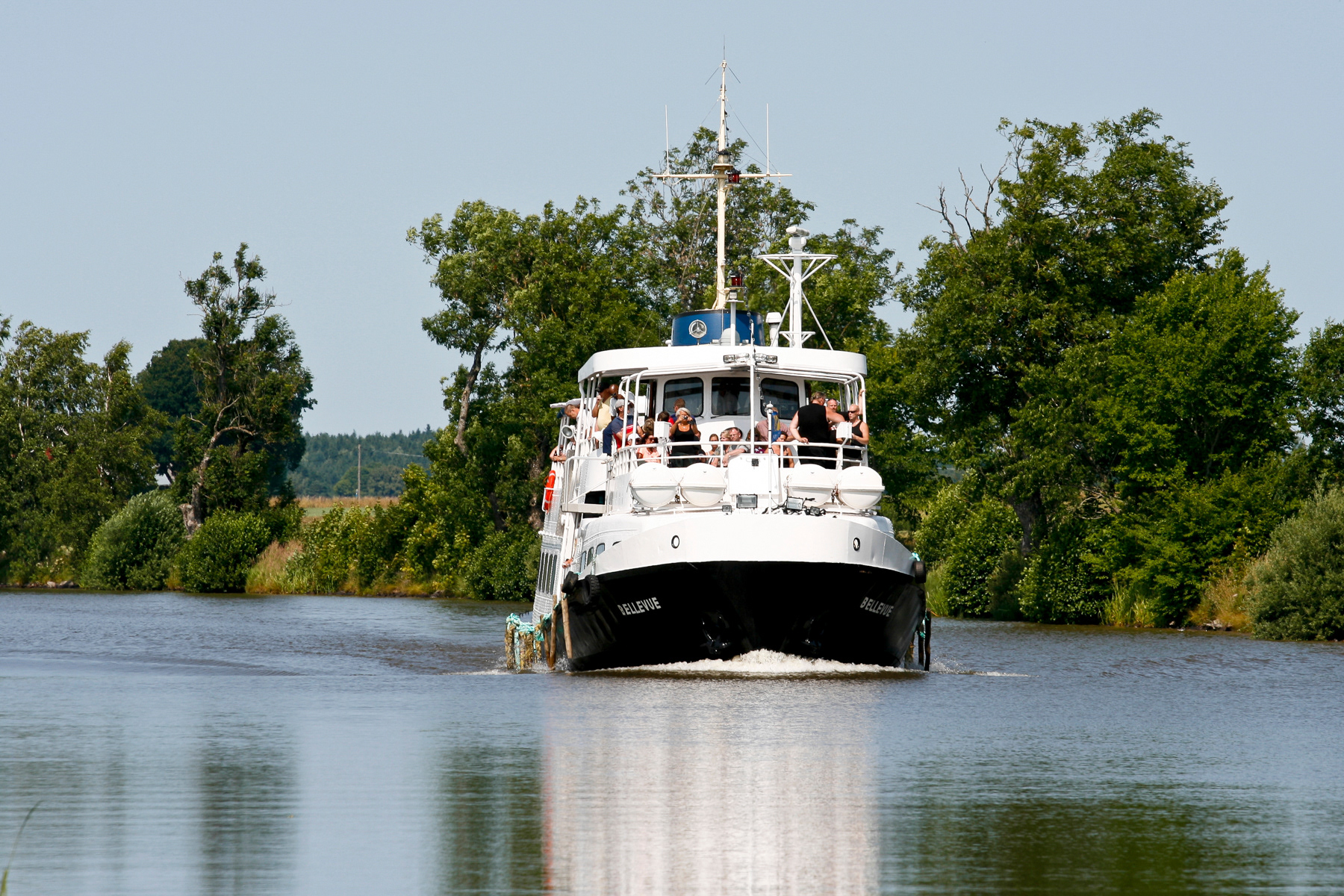
The Göta Kanal (Gothia Canal), the most impressive historic engineering accomplishment of Sweden seen here near Hajstorp. Passenger boat Bellevue cruising the canal. July 2013.

The Göta Kanal (Gothia Canal) near Hajstorp. Passenger boat Bellevue cruising the canal, July 2013.
The south of Sweden is dominated by two giant lakes: Vänern and Vättern. They are interconnected by the Gothia Canal (Göta Kanal in Swedish), which has been Sweden's historic biggest engineering accomplishment. This story is in large parts a republication in English of excerpts of my 2008 travel guide book in Dutch: Wereldwijzer Zweden.
At the Göta Kanal (Göta Canal) in Sjötorp at lake Vänern, Västergötland region, Sweden (Sverige), July 2013..

At the Göta Kanal in Sjötorp at lake Vänern, Västergötland region, July 2013.
Göta Kanal (Gothia Canal)
The Göta Kanal is what the Delta Works are for the Dutch, the Three Gorges Dam for the Chinese, the Hoover Dam for the American or the artificial Islands for the people of Dubai: the greatest national hydro-engineering achievement of a moment in the past. 
Nowadays, the Canal is a major touristic attraction, but for a log time the 190 kilometre (108 mile) long canal was of great economic importance — connecting Stockholm in the east and Gothenburg in the west. Soon, the Gothia Canal will celebrate its 200 years anniversary; as 60,000 soldiers and a small group of civilians excavated it between 1802 and 1832. The official inauguaration of the major part was in 1827.
New techniques from the early 19th century proved very useful to the builders. The construction team led by Baltzar von Platen initially sources dredgers, cranes, pile drivers, cement mixers, and measuring instruments from England, but later, their own factory in Motala manufactured more construction equipment.
Back then, the military not only dug out the canal, it also built an enormous fortress roughly halfway: in Karlsborg where the Göta Canal and Lake Vättern meet. Karlsborg was intended to be the last stand of Sweden, to serve as a getaway capital for the royal family, the government and the military leadership which all used to have their headquarters in the much more vulnerable Stockholm on the east coast. Three nearby army camps and a major air base relatively nearby should protect the area, even today.
The greatest achievement of the builders of the Göta Canal is primarily the successful bridging of a height difference of 91.7 meters between the Baltic Sea and Lake Vänern using a total of 58 locks. Between Lakes Roxen and Boren, boats are raised 40 meters – mainly by the Bergsslussar. In Vättern, the water level is over 88 meters. West of Karlsborg, the highest point of nearly 92 meters is reached in Lake Viken, after which ships descend via the western part of the canal to a level of 44 meters above sea level in Lake Vänern.
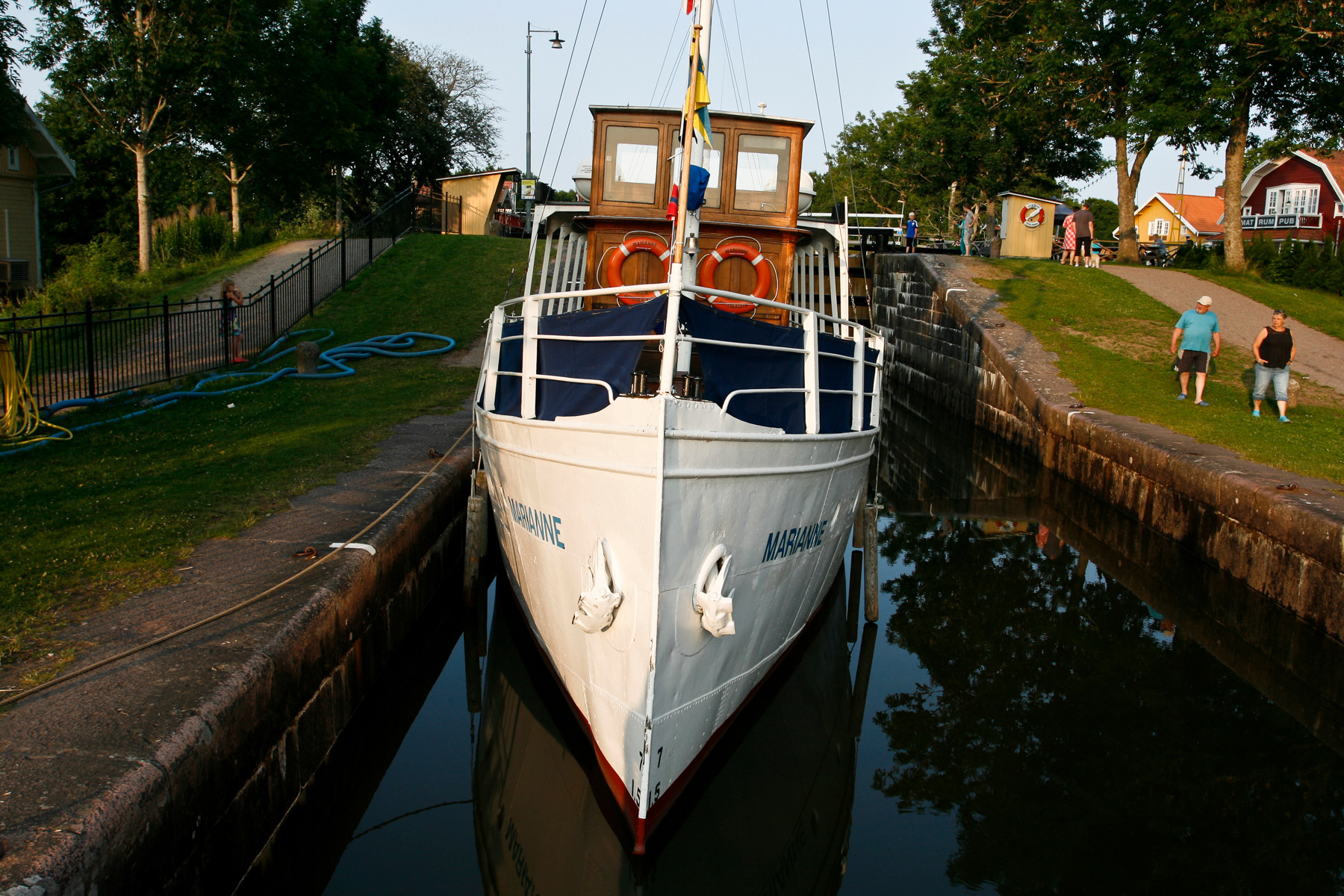
Boat Marianne at the locks of the Göta Kanal (Göta Canal) in Sjötorp at lake Vänern, Västergötland region, Sweden (Sverige)., July 2013.

Boat Marianne at the locks of the Göta Kanal in Sjötorp at Lake Vänern, July 2013.
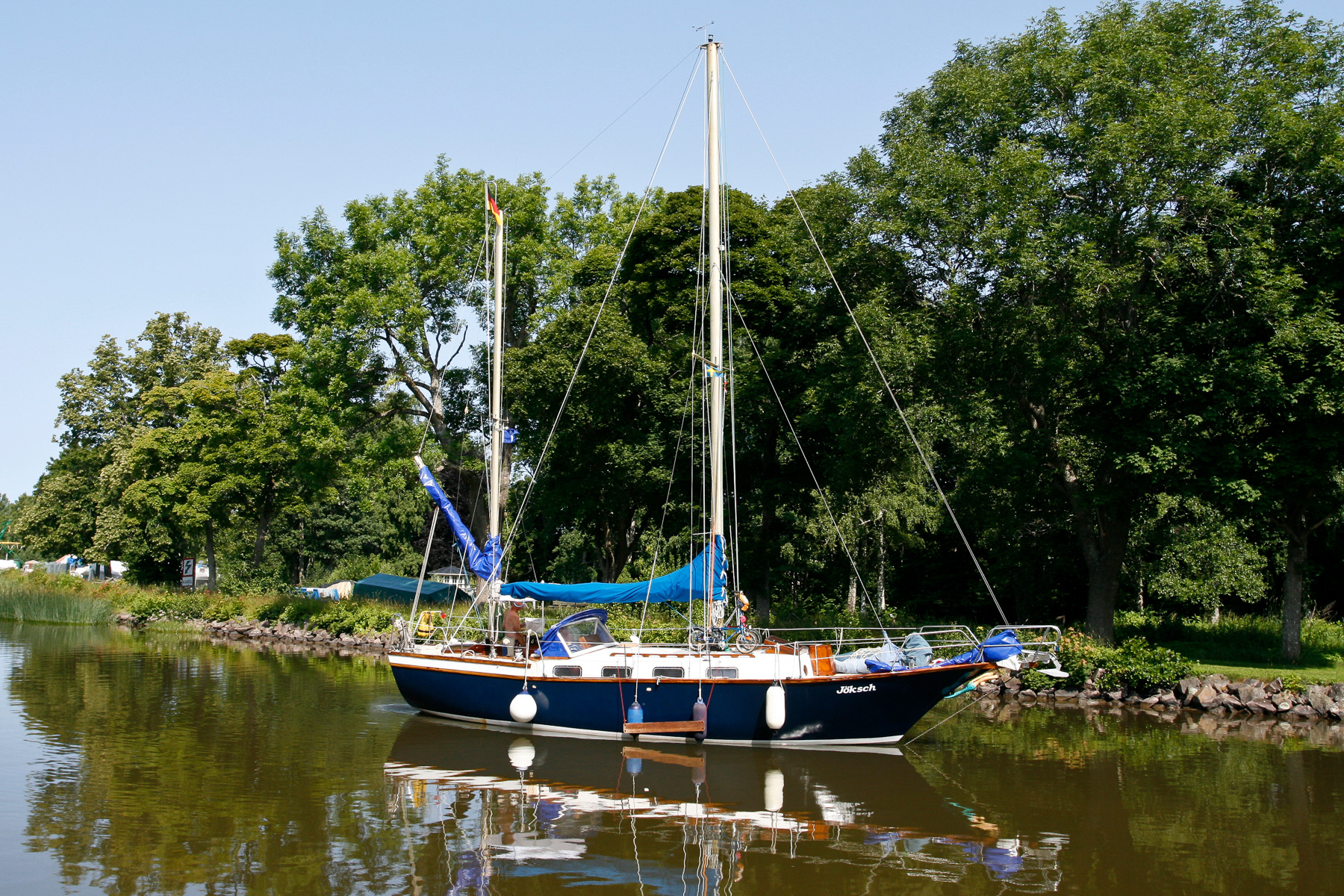
Motorized sailing boat Jöksch at the canal near Motala, July 2013.
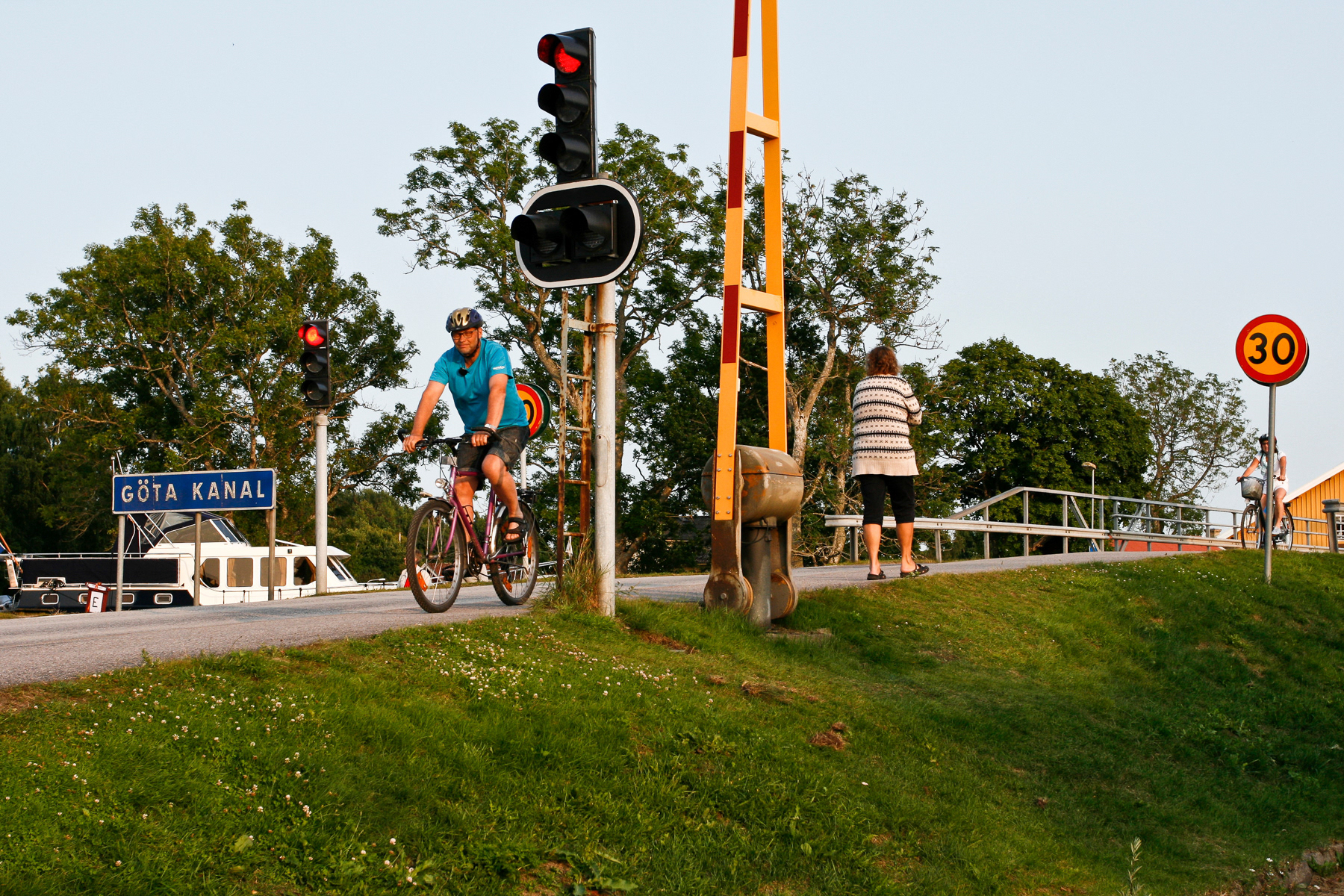
A bridge across the Canal near Motala, July 2013.
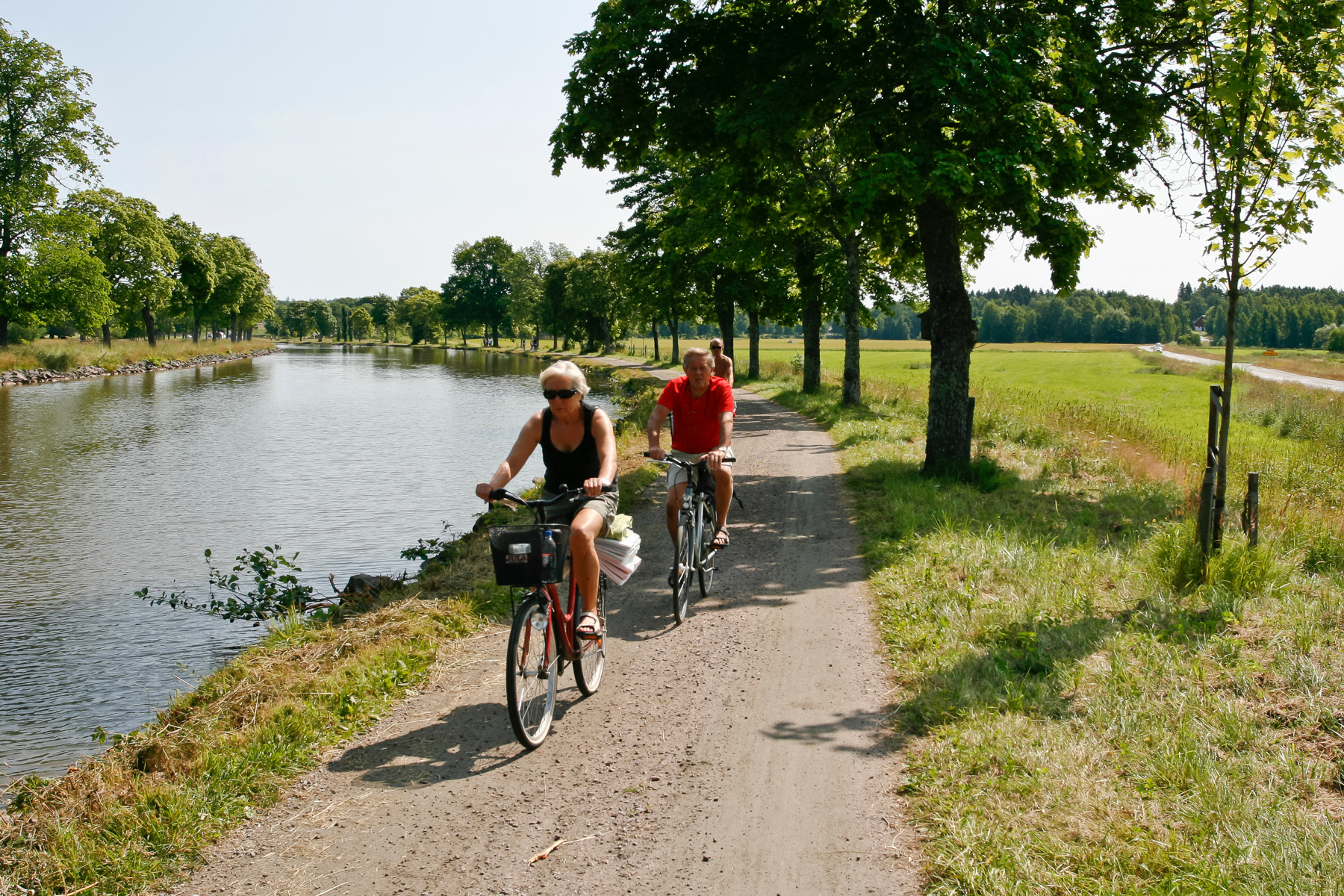
Cycling is a popular recreational activity alongside the canal, seen here in / near Lyrestad, July 2013.
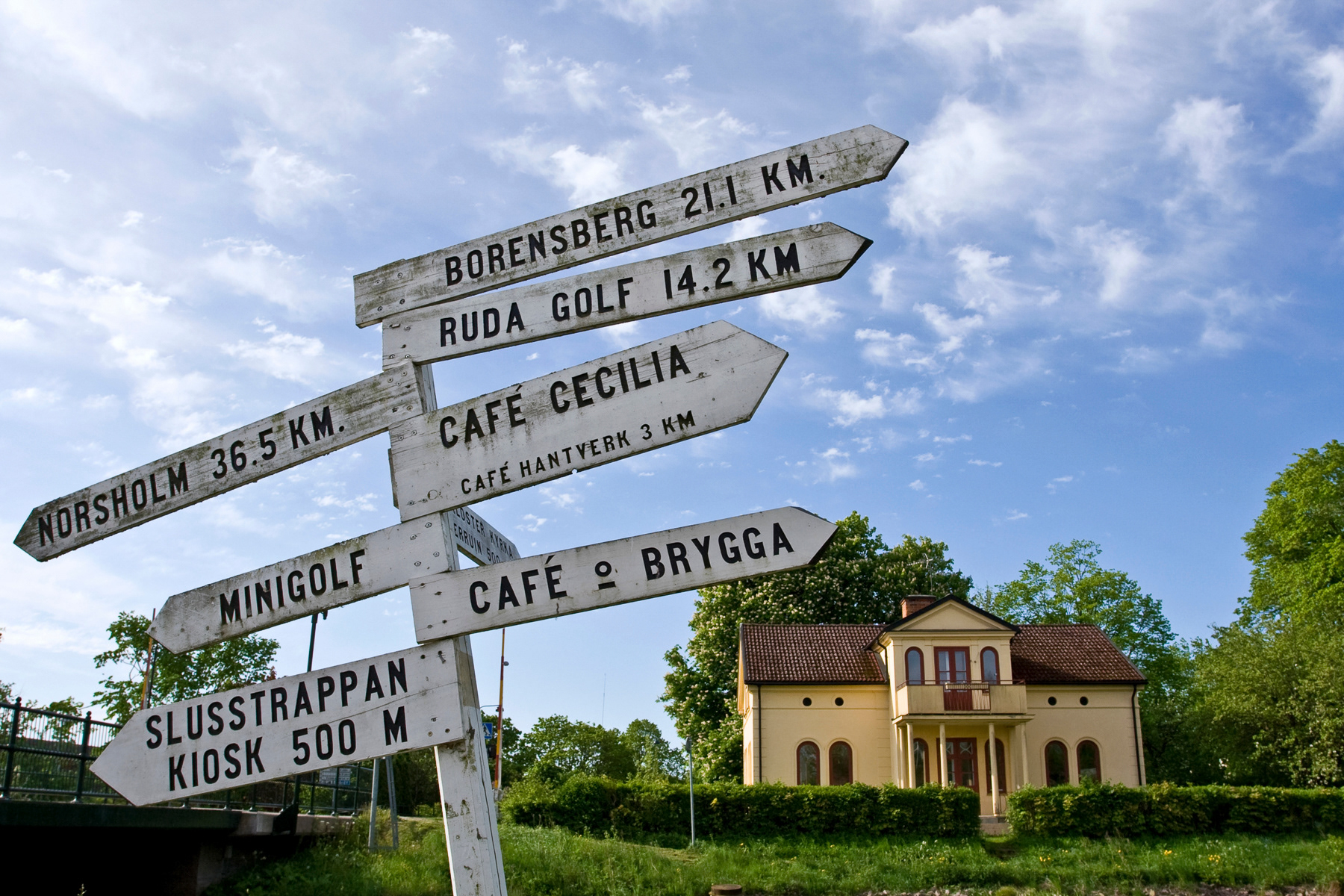
Cycling is a popular recreational activity alongside the canal, seen here in / near Lyrestad, July 2013.

Road signs at the bicycle path adjacent to the Göta Canal (Kanal) near Berg, close to Linköping, Östergötland, Sweden (Sverige), July 2007.

Road signs at the bicycle path adjacent to the Göta Canal near Berg, close to Linköping, Östergötland region, July 2007.
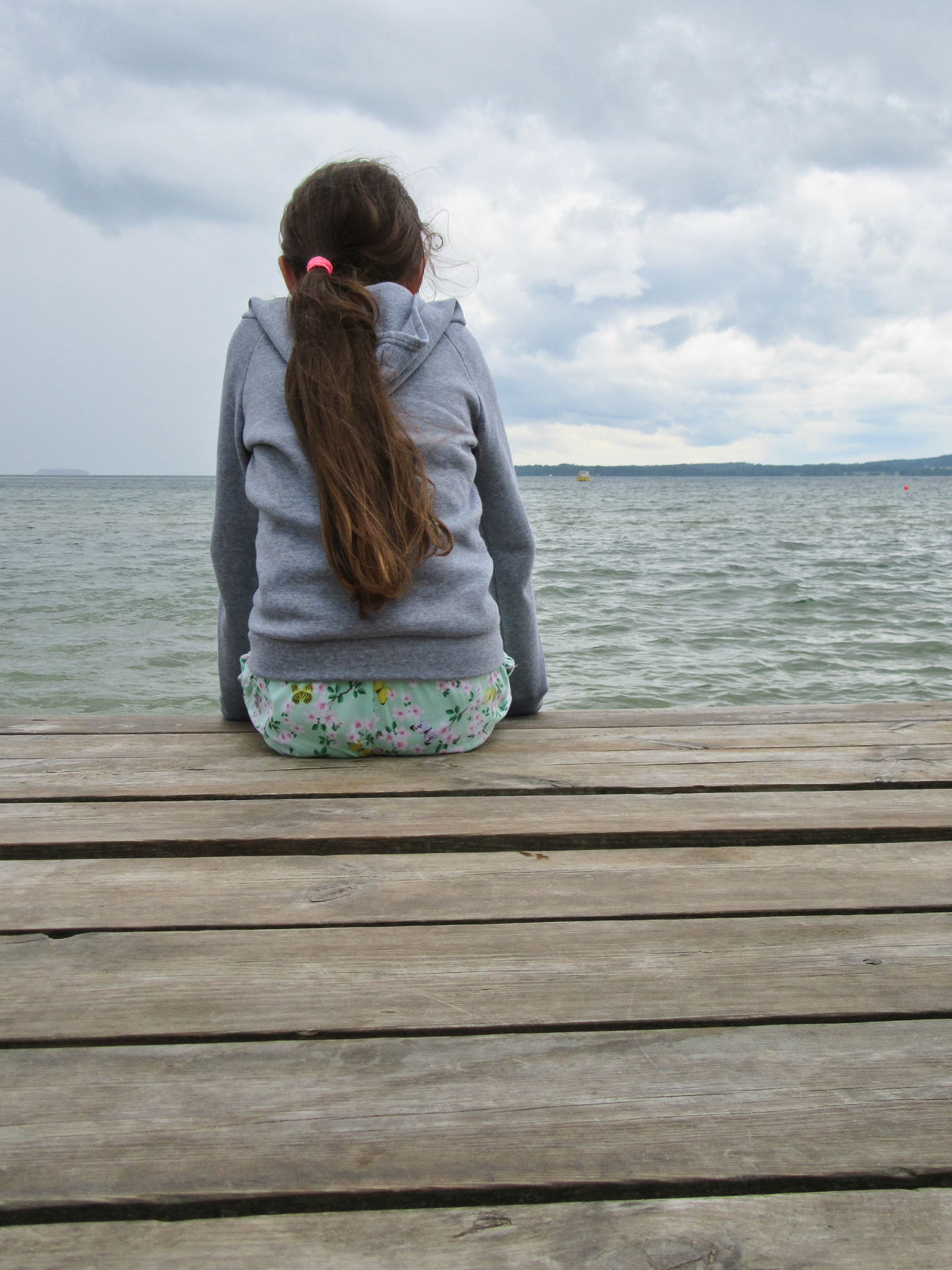
Lake Vättern
Matches, sewing machines, blooming rapeseed. Sweden’s second-largest lake, Vättern, has its gems mainly on the eastern shore around Vadstena, but a tour along the elongated lake takes the traveller to other special places.
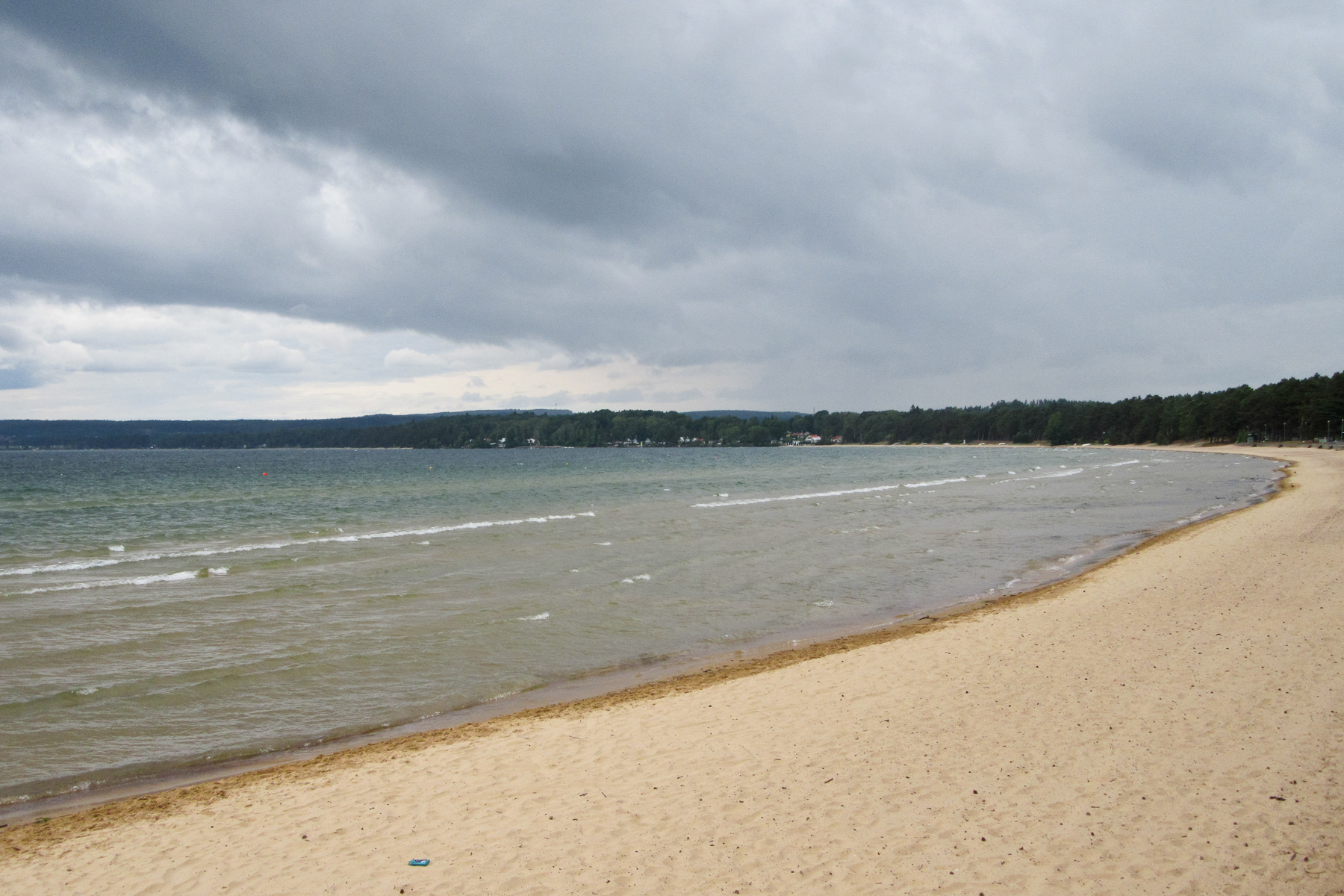
With 1,893 km² (731 square miles) and a volume of 77.6 km³ (27.4 billion tonnes), Vättern is more an inland sea than a lake. It is Sweden's second-largest body of water, being between 40 and 128 metres (131 to 420 feet) deep.
Lake Vättern near Motala, June 2016.
Lake Vättern near Motala, June 2016.

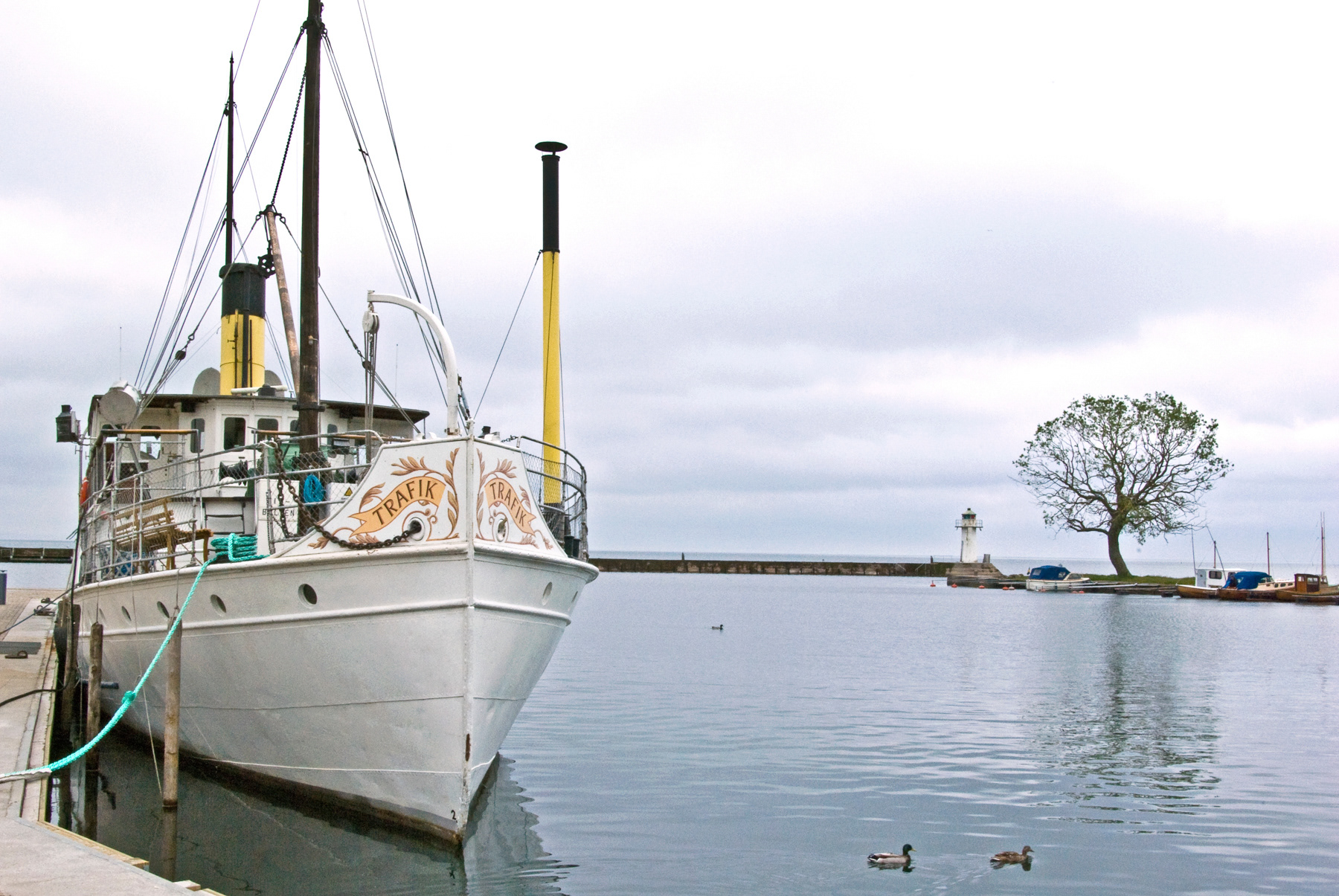
Steamship Trafik in the harbour of Hjo, at lake Vättern, Västergötland, Sweden (Sverige)., May 2007.

Steamship Trafik in the harbour of Hjo, at lake Vättern, Västergötland, May 2007.
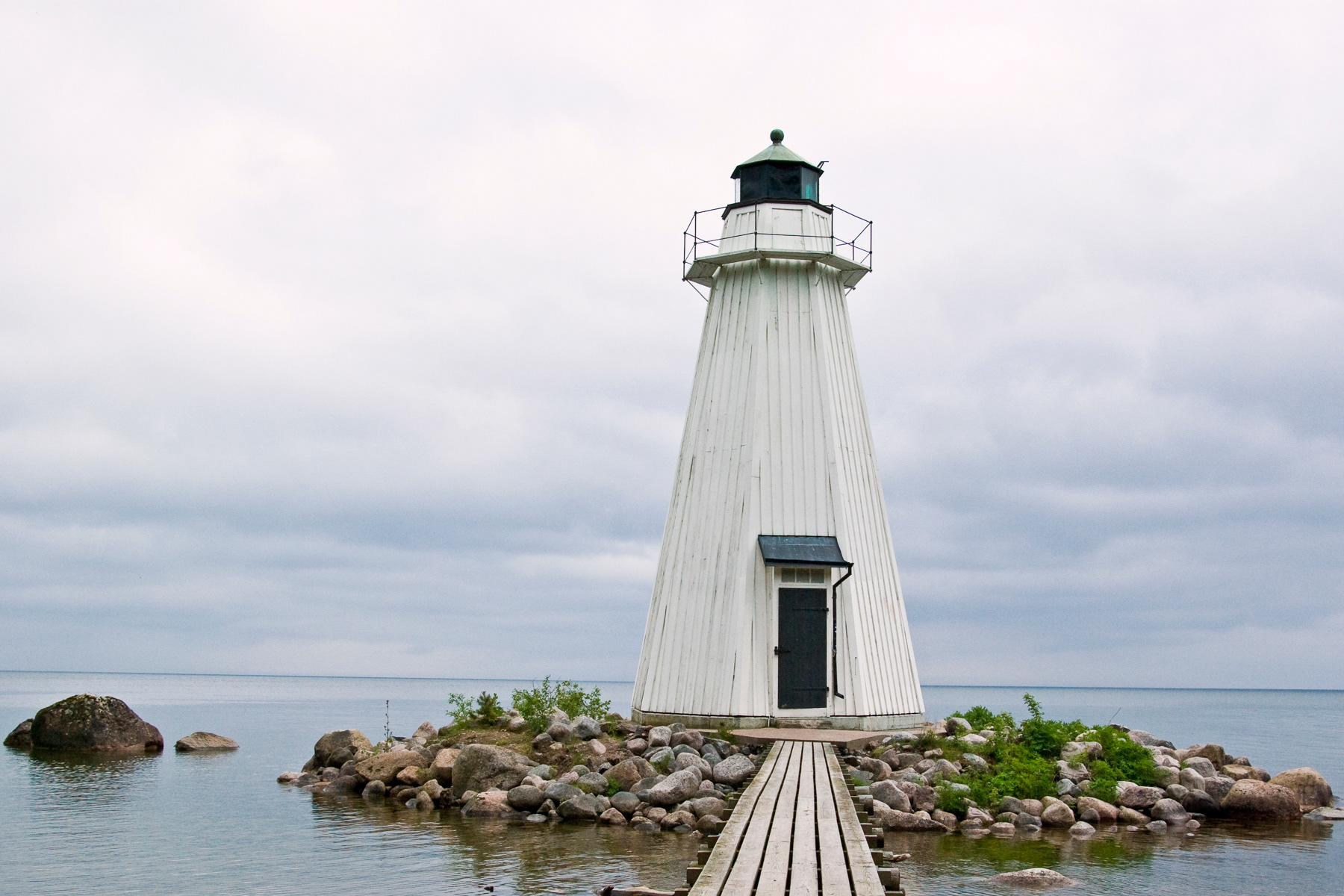
Light tower of Karlsborg fortress (fästning), at lake Vättern, Västergötland, Sweden (Sverige), May 2007.

Light tower of Karlsborg fortress, at lake Vättern, Västergötland, Sweden, May 2007.
Gränna and Brahehus
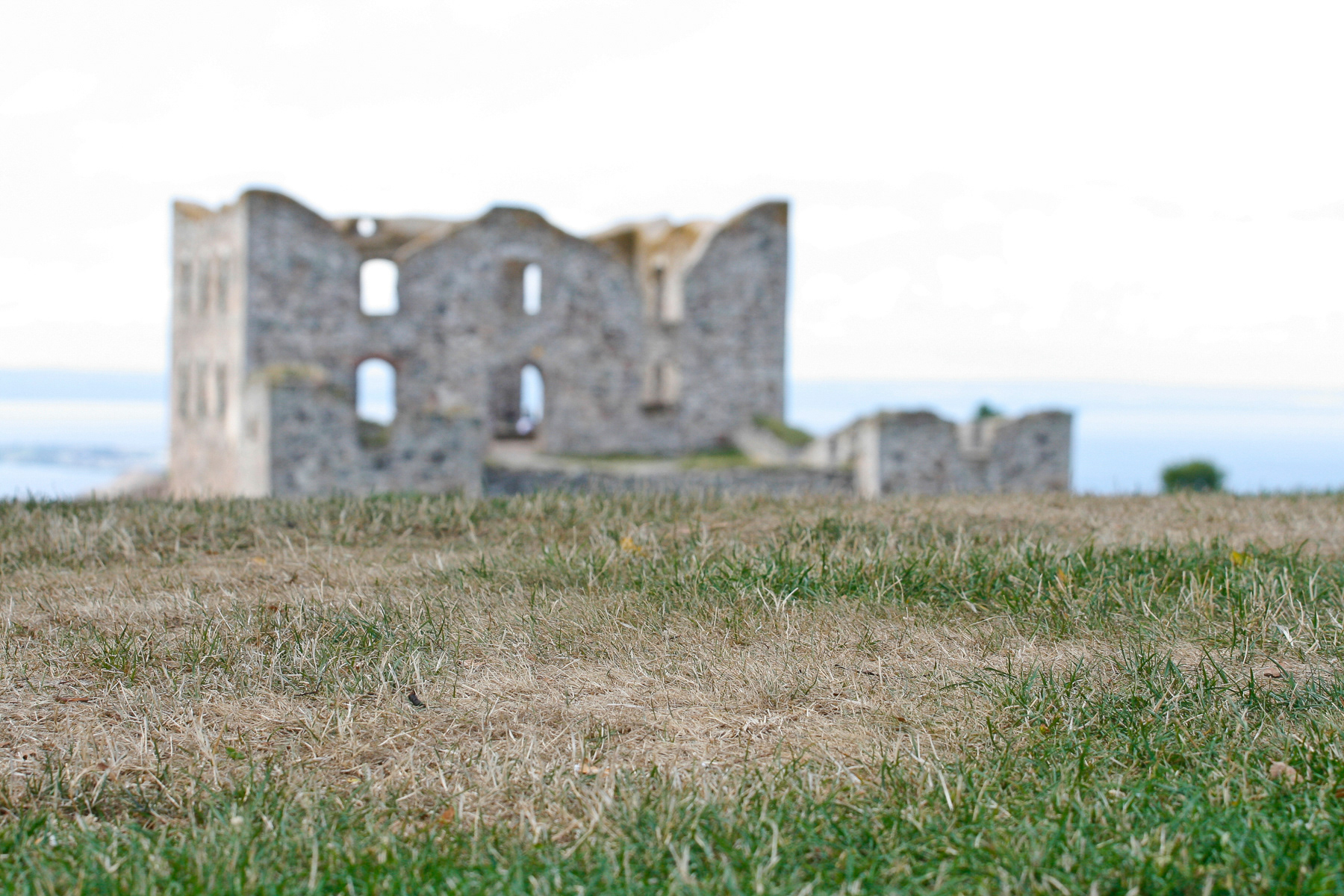
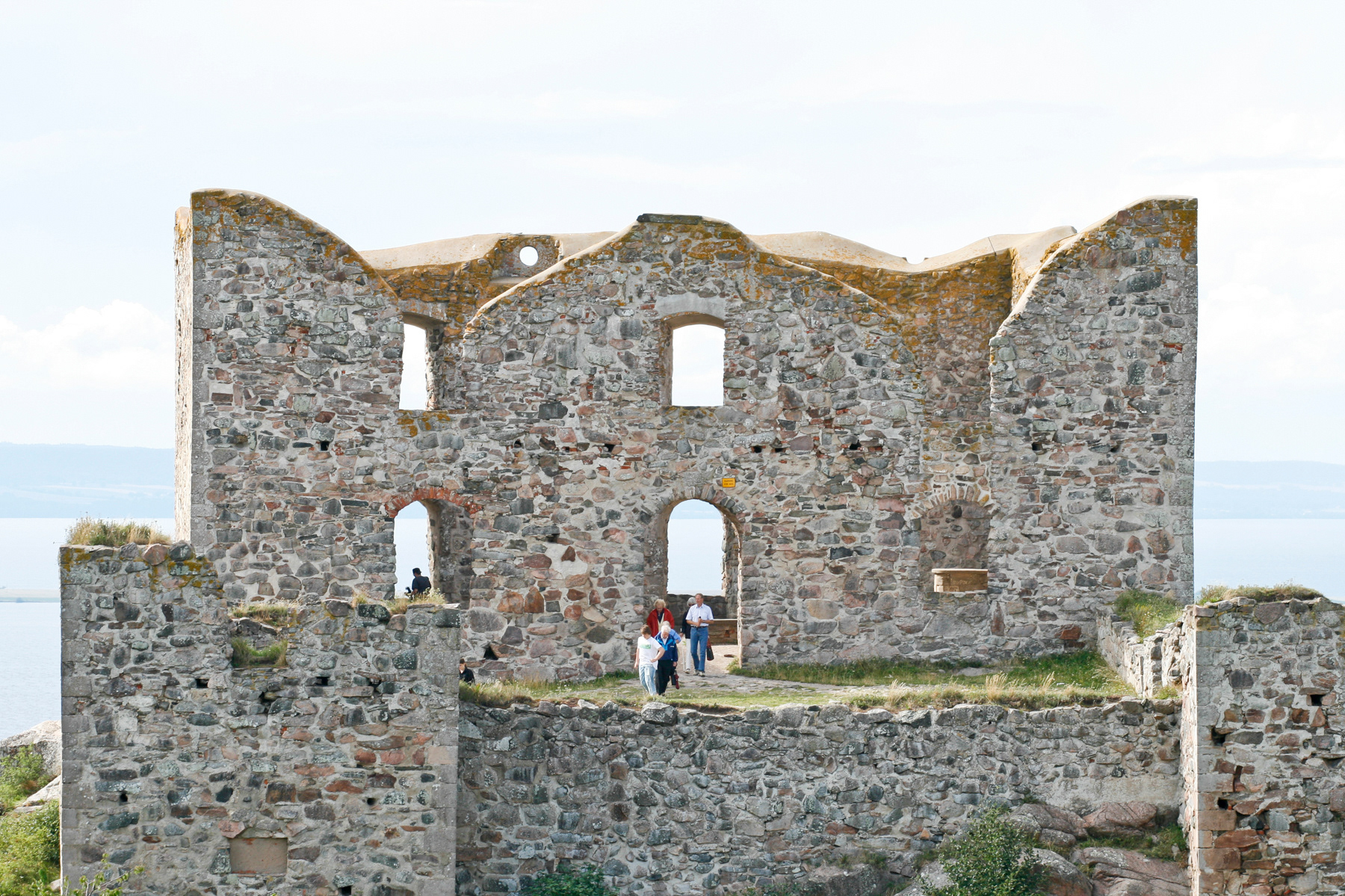
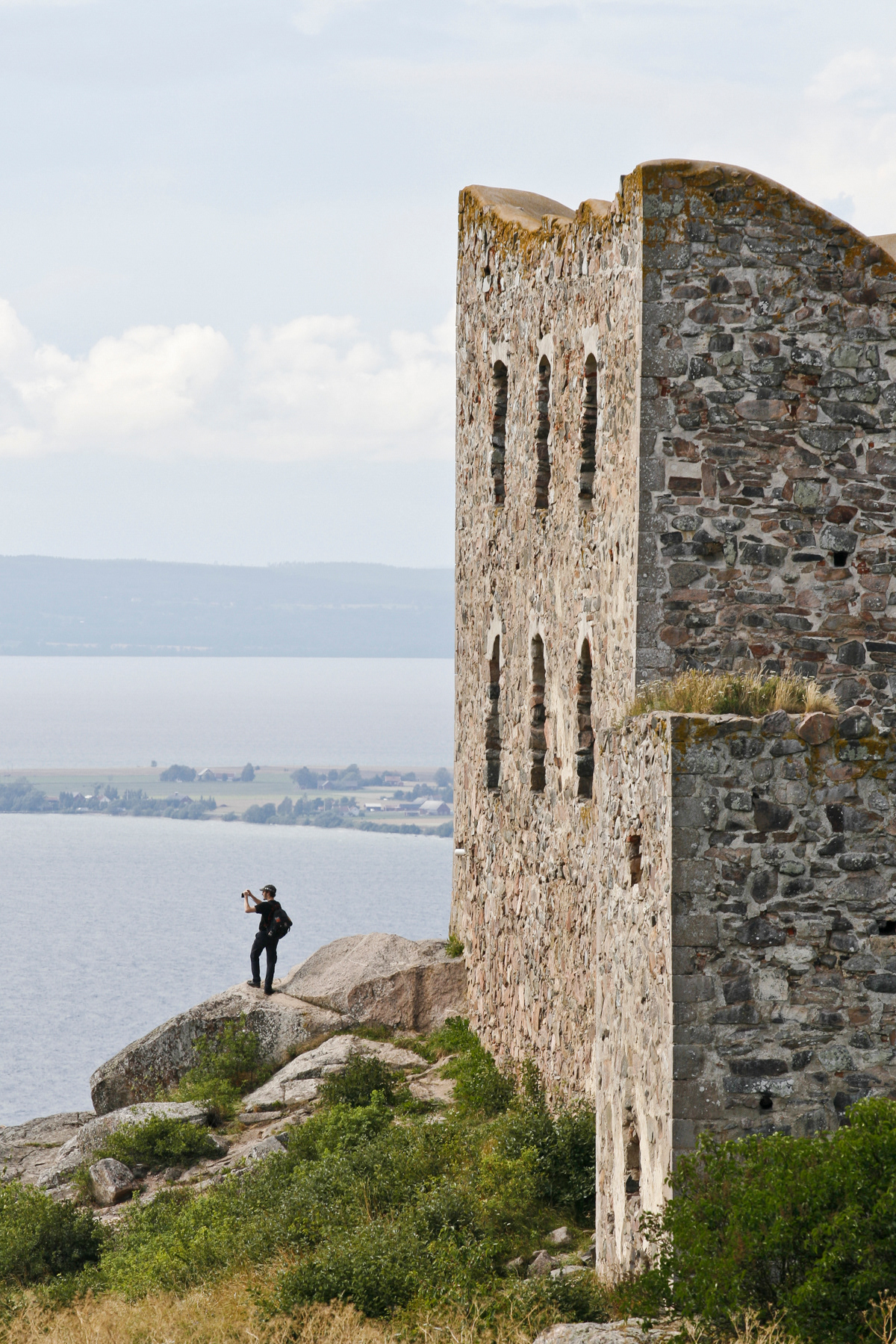
Anyone wishing to capture Sweden's largest ruin on camera needs to be lucky. Sandwiched between the E4 motorway and Lake Vättern, the Brahehus in Gränna is frequently shrouded in mist rising from the water. This also detracts from the view of the lake and the large island of Visingsö. Count Per Brahe had the castle, which the Brahehus once was, built in 1640 and founded Gränna.
The Brahehus ruin in Gränna, province of Jönköping, southern Sweden (Sverige)., August 2008.

The Brahehus ruin in Gränna, province of Jönköping, southern Sweden, August 2008.
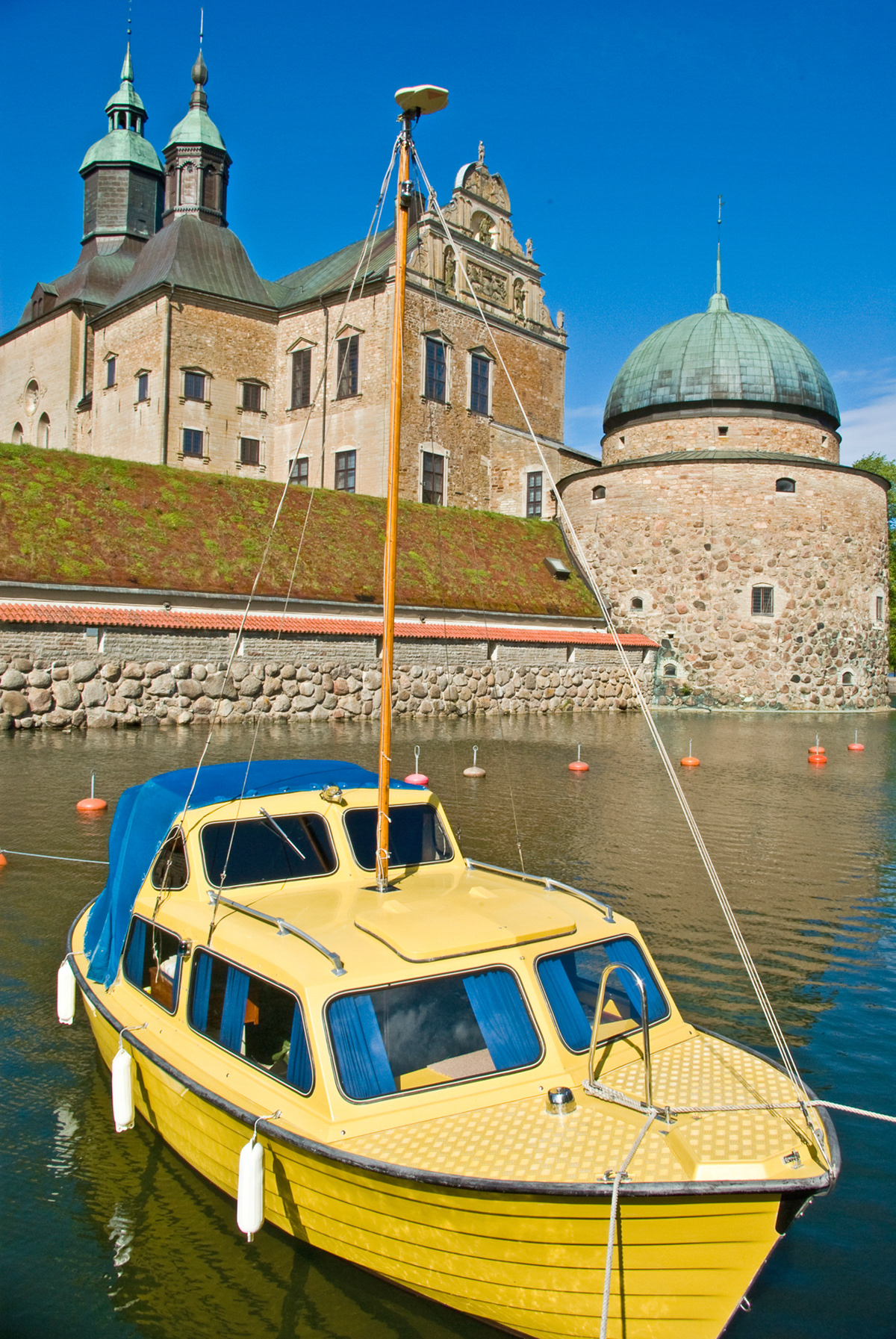
Vadstena and its castle
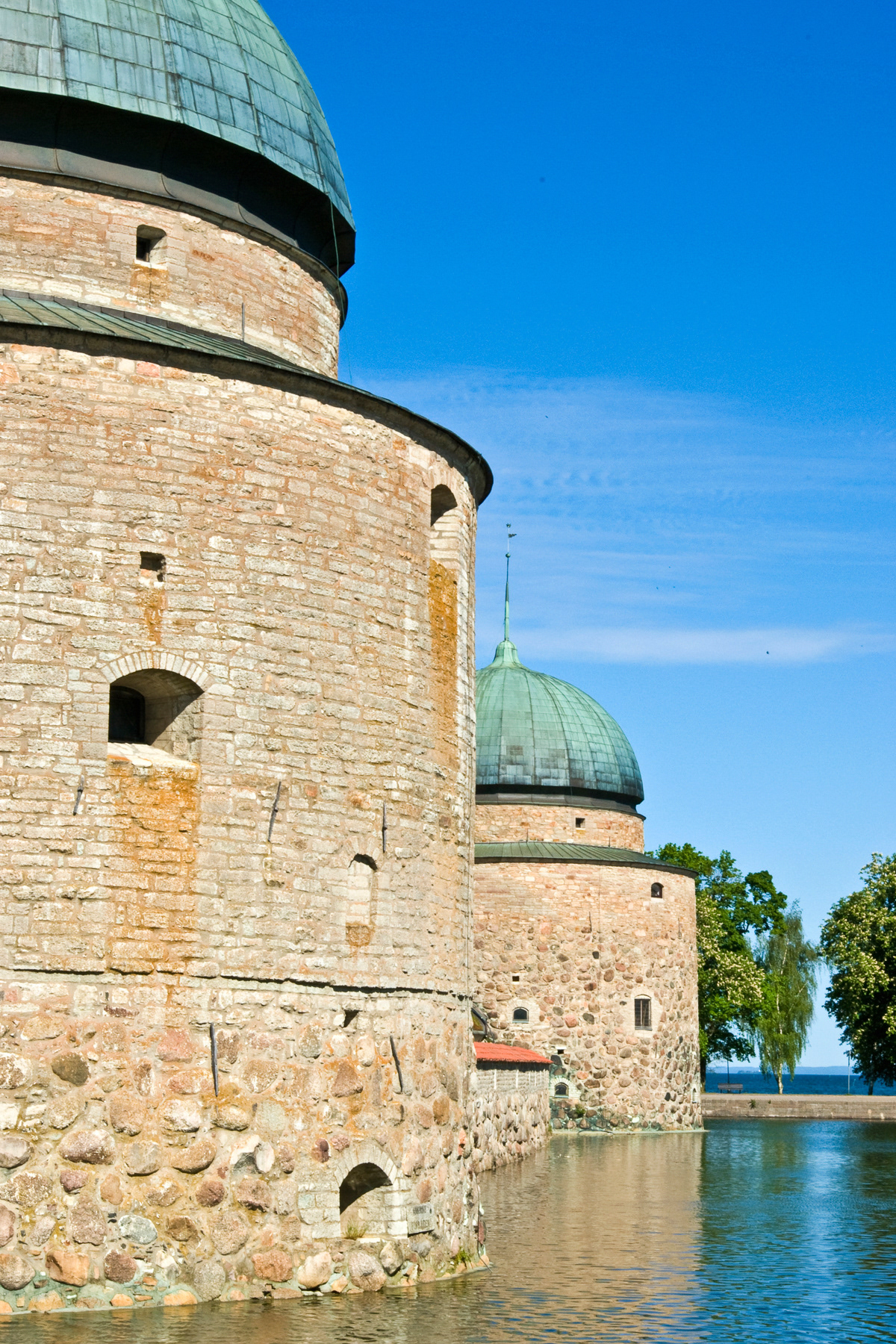
To offer Stockholm some advanced protection against the Danes, King Gustav Vasa ordered the construction of the fortress in Vadstena around 1545. Arendt de Roy was the master builder, and the Fleming died in the village in 1589; his stone stands proudly in Vadstena's monastery cemetery.
Vadstena Slott was not, however, De Roy's greatest achievement: that was the reconstruction of Eksjö following the attack by the Danish commander Daniel Rantzau. His army of 8,500 men wreaked havoc in southern Sweden between 1566 and 1568. One Swedish stronghold fell after another, but the Swedish troops in the Vadstena fortress managed to withstand Rantzau's siege, while the village itself was ablaze.
Around 1600, the then Swedish king had Vadstena Slott further rebuilt, including the addition of its own chapel. Part of the fortress was demolished in the 19th century to make way for the nearby harbour, but around the year 2000, Vadstena Slott was restored to its former glory.
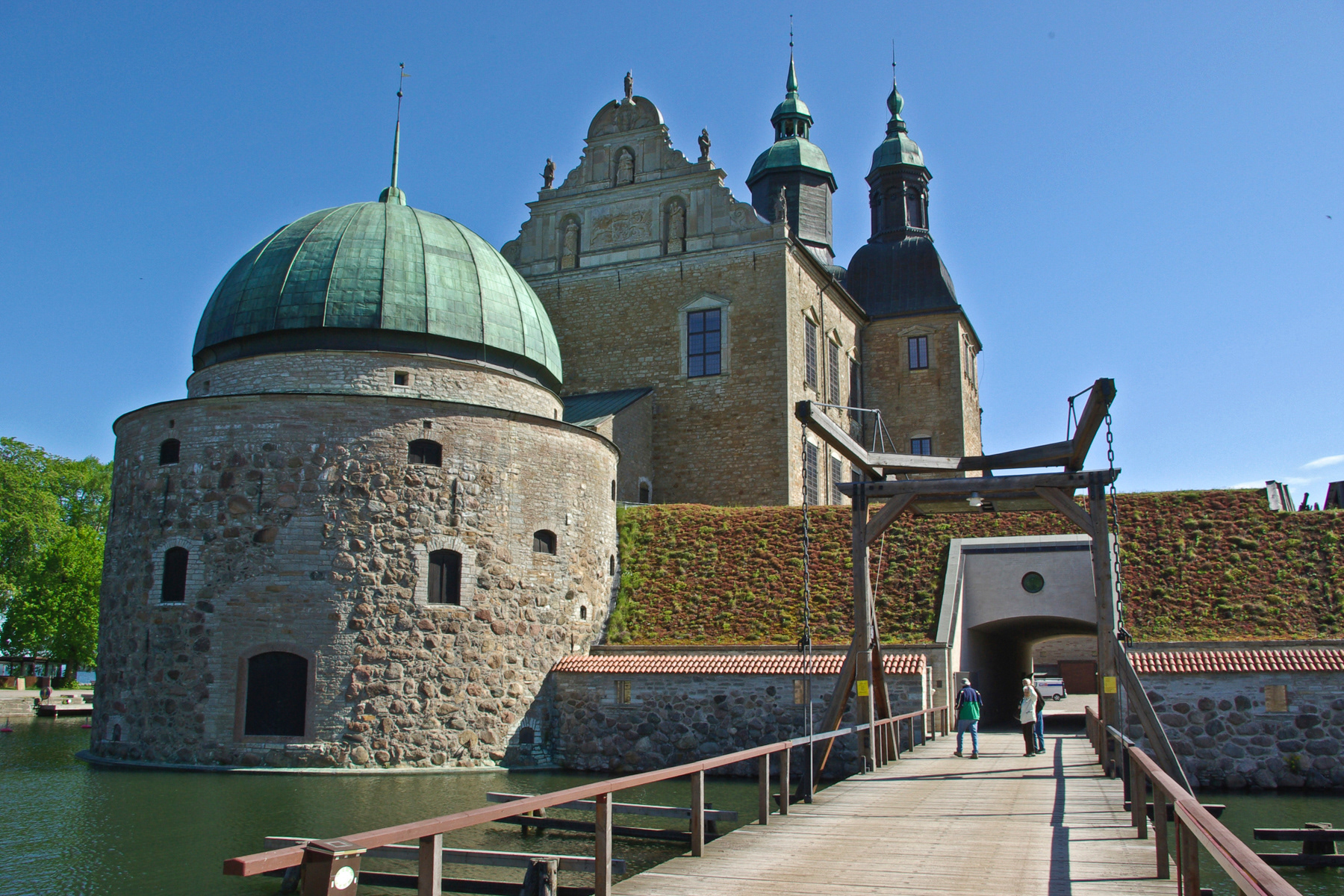
Vadstena Slott (castle), at lake Vättern, Östergötland, Sweden (Sverige), May 2007.

Vadstena Slott, at lake Vättern, May 2007.
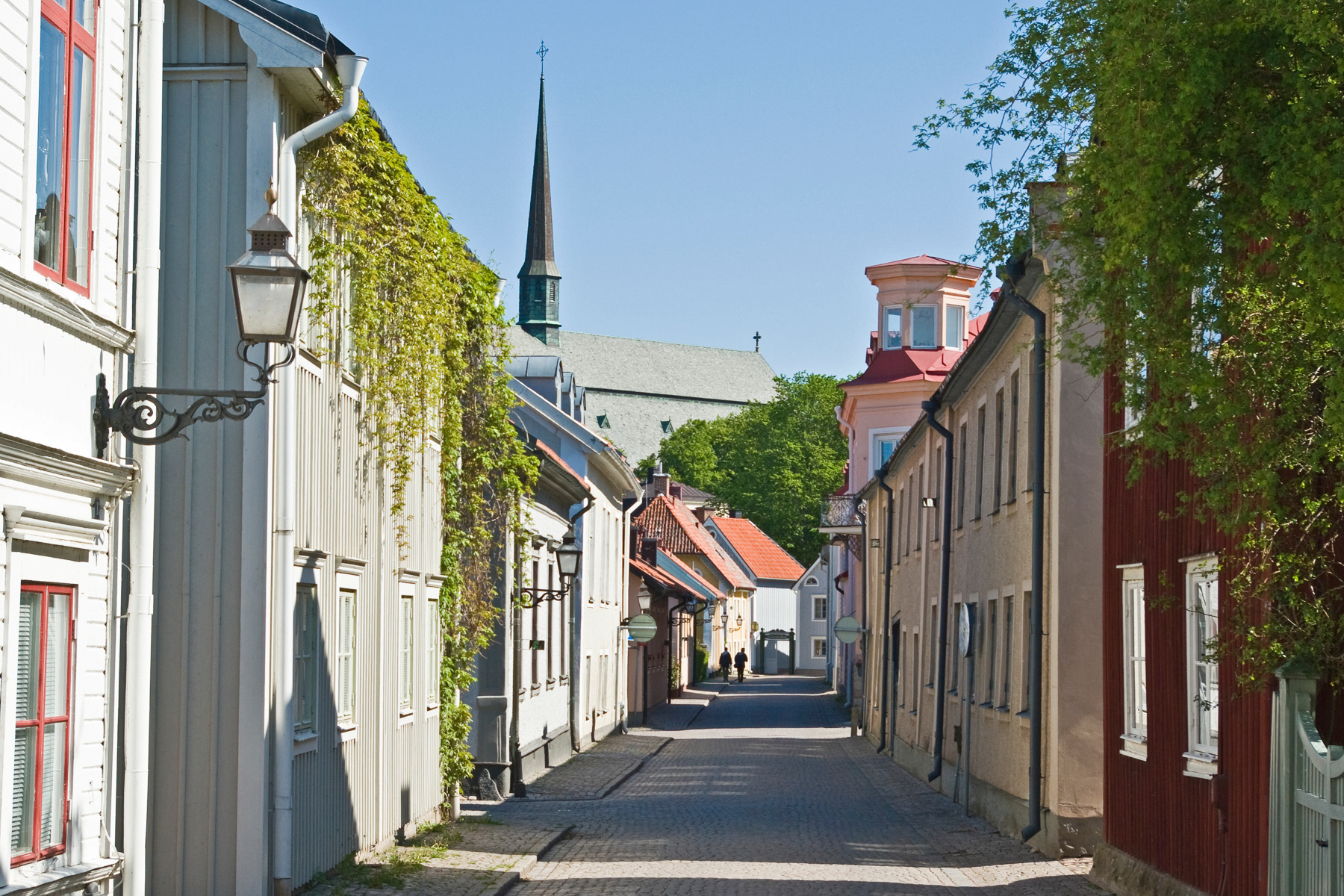
The streets of Vadstena town, May 2007.
The streets of Vadstena town, May 2007.

In the footsteps of Temple Knight Arn
Knight Templar Arn Magnusson is the creation of Jan Guillou. This Swedish writer and journalist—one of the country's most famous — sets his hero to life around 1150, during the height of the Swedish Age of Chivalry. The eastern shore of Lake Vättern is largely his home. The adventures of Arn have also reached the cinema, check IMDB.com.
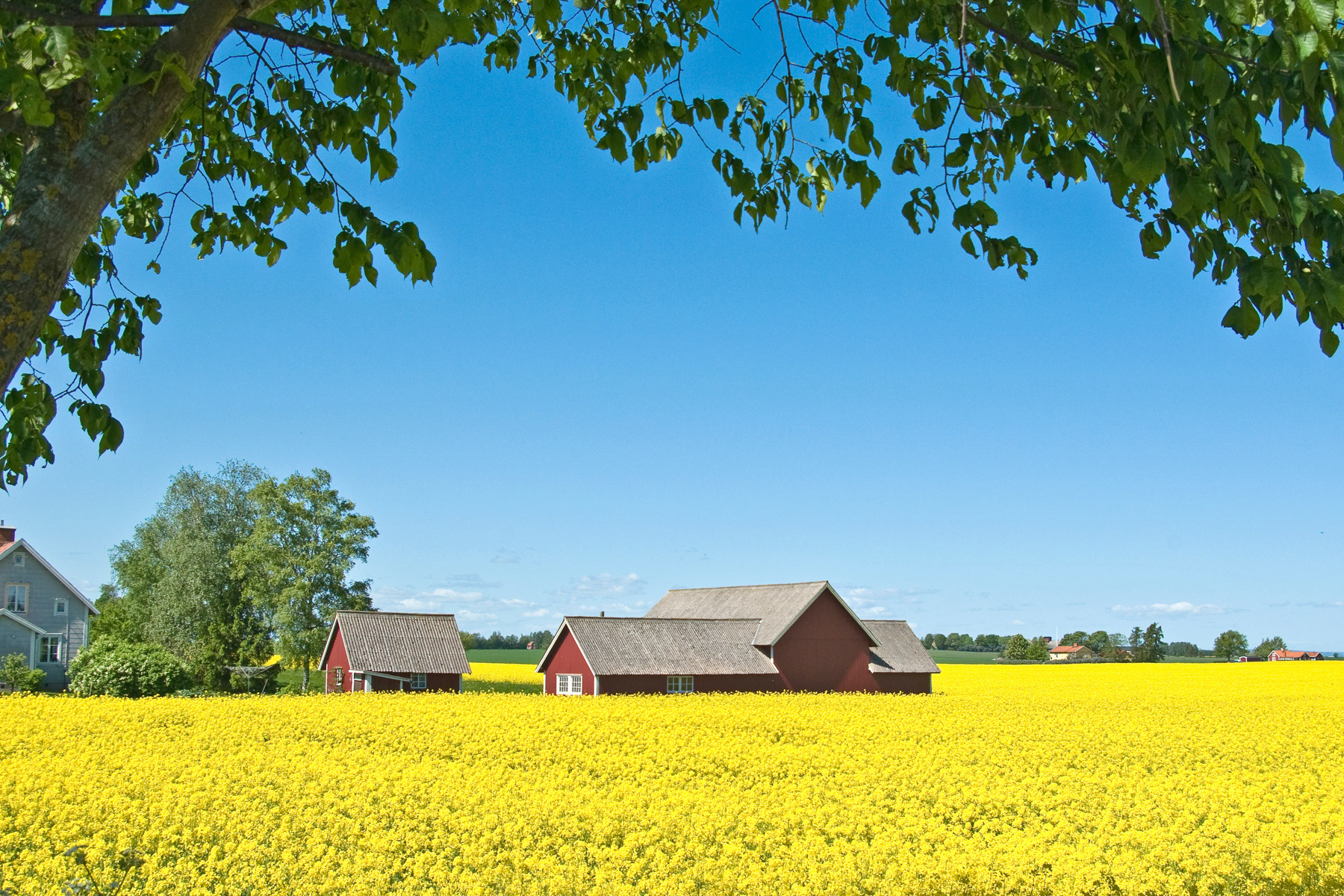
Rapeseed fields (brassica napus) near Skänninge, Östergötland, Sweden (Sverige), May 2007.

Rapeseed fields (brassica napus) near Skänninge, a bit east of Lake Vättern, Östergötland region, May 2007.
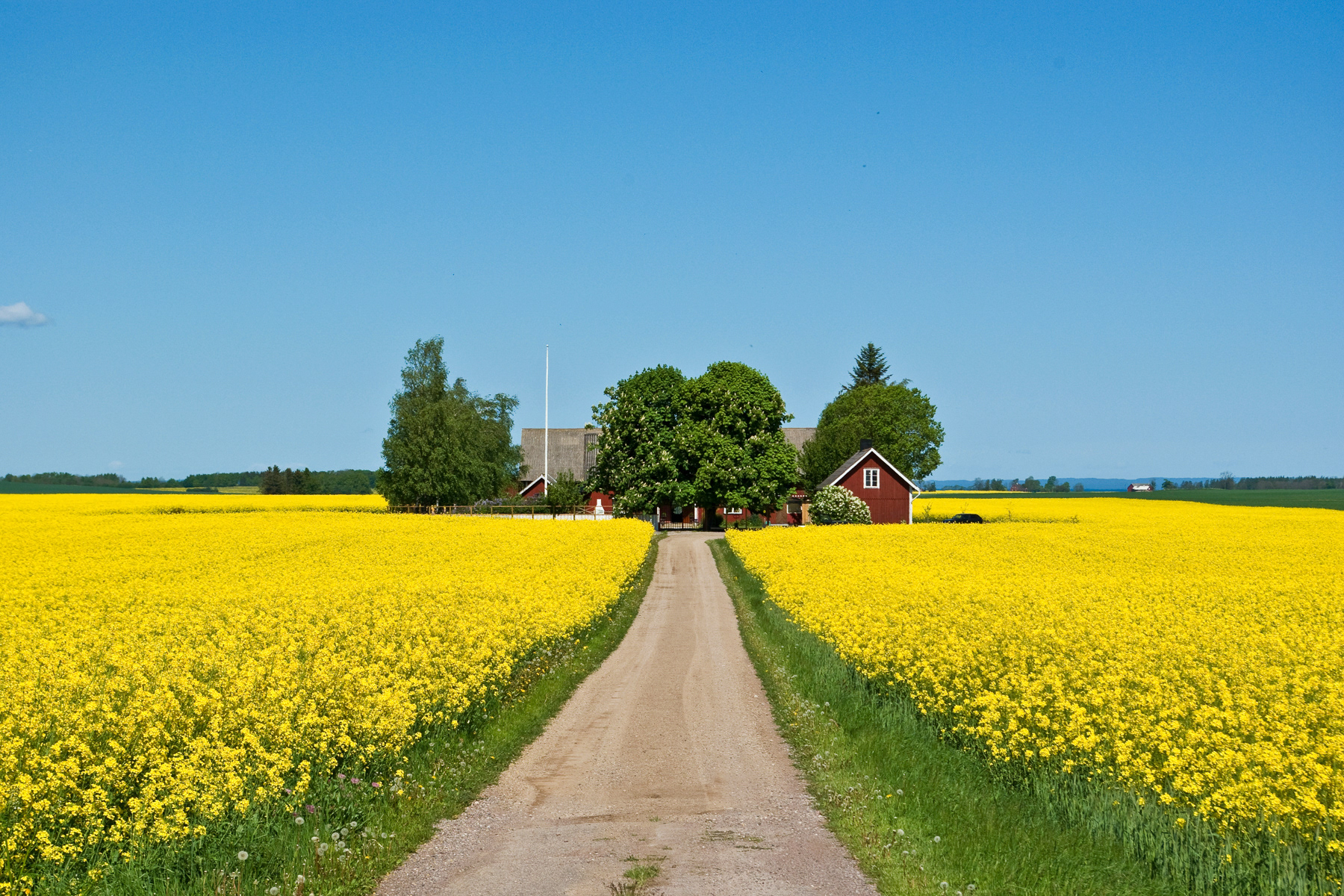
Rapeseed fields (brassica napus) near Skänninge, a bit east of Lake Vättern, Östergötland region, May 2007.
Rapeseed fields (brassica napus) near Skänninge, a bit east of Lake Vättern, Östergötland region, May 2007.

Huskvarna & Husqvarna
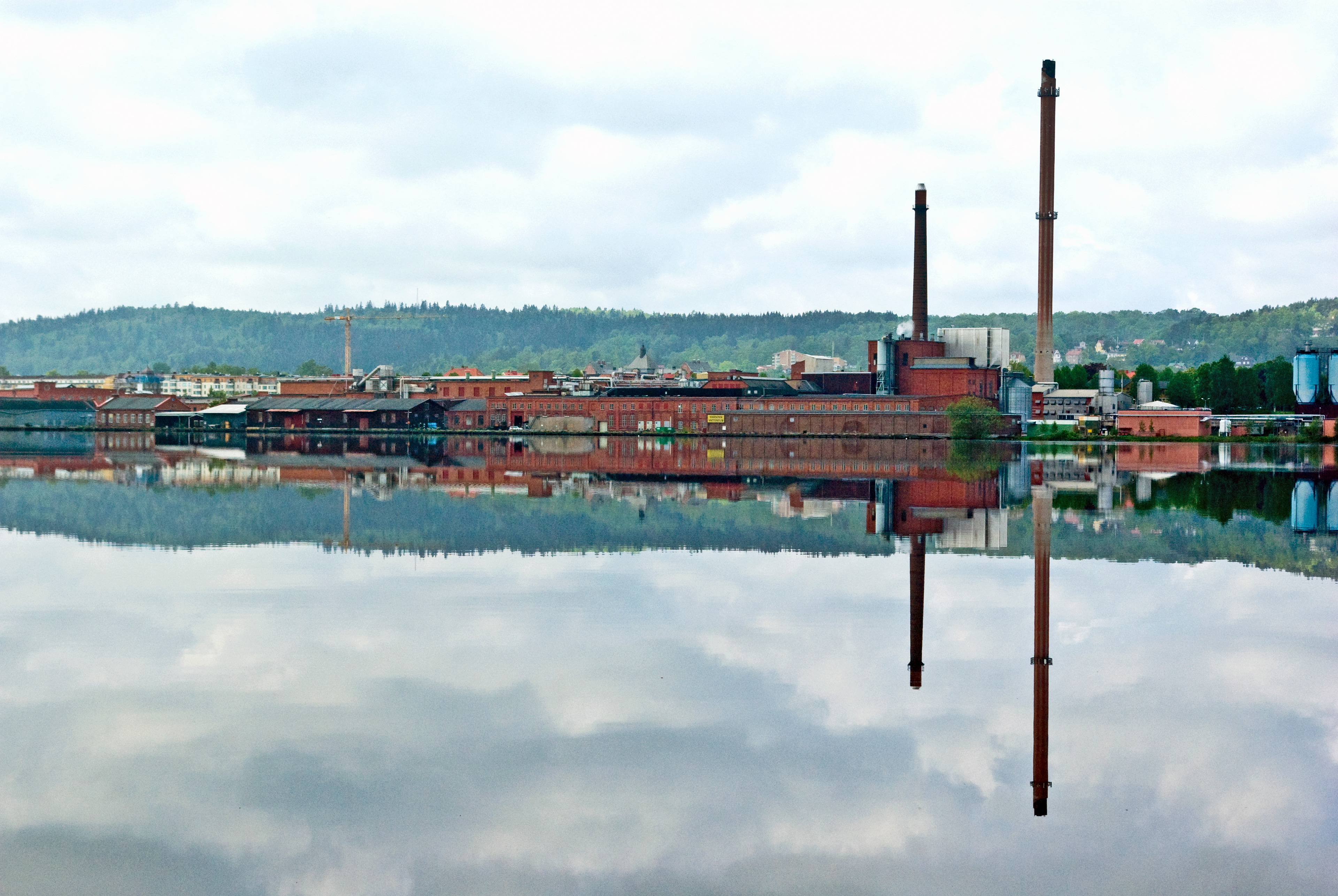
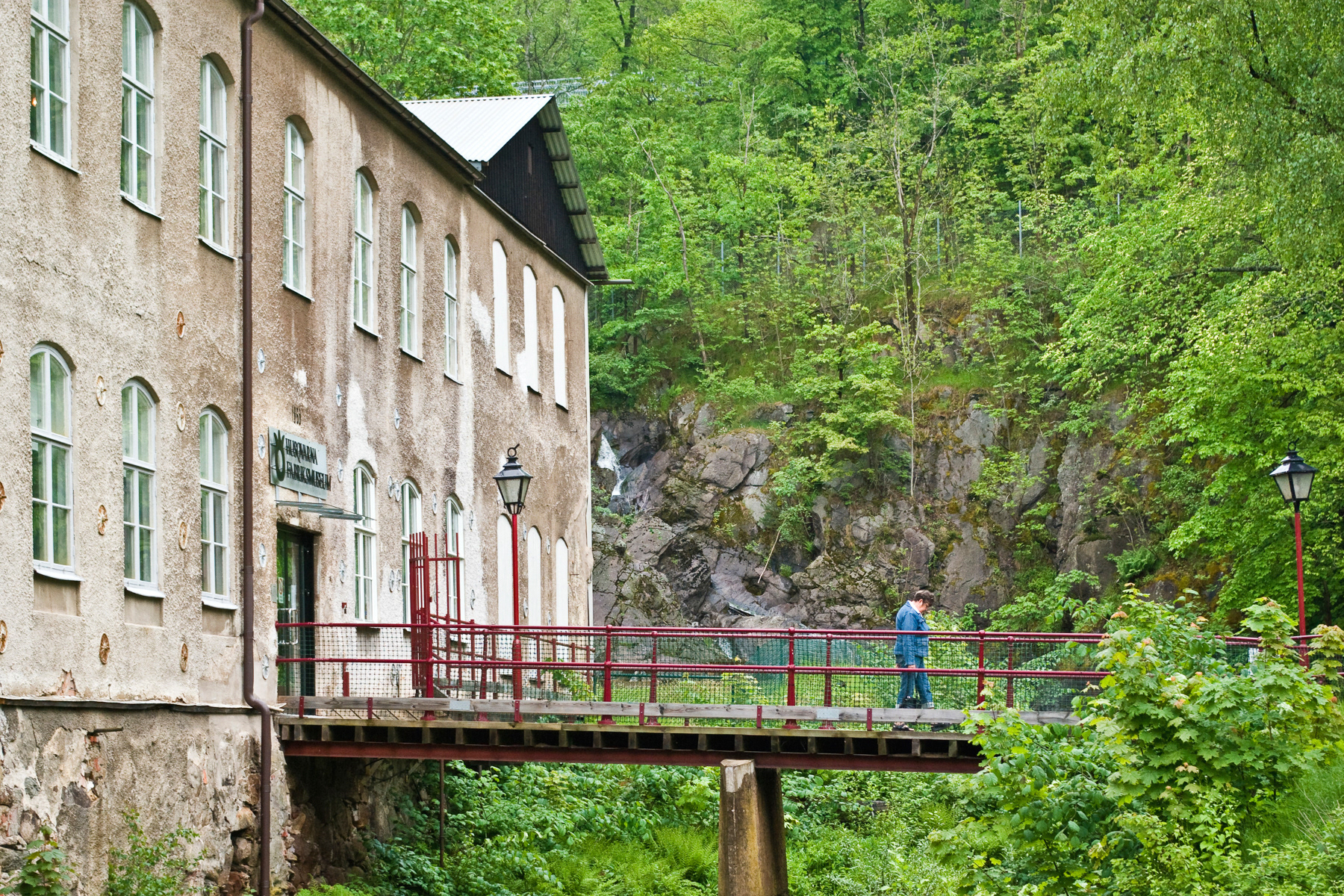
In some countries known for its kitchen and forestry equipment, the history of the Husqvarna company is less peaceful. By royal order, a weapons factory was built in 1689 near the waterfalls of the then still small village of Huskvarna, on the southern banks of Lake Vättern.
It was not until 1872 that the first sewing machine named Nordstjernan rolled out of the factory. The old factory is now a very nice museum (check husqvarnamuseum.se). Walk 150 metres up the hill from the gate of the Husqvarna Factory Museum to the fork at Storgatan street, and one overlooks the old workers' village. 
Husqvarna Fabriksmuseum, Huskvarna, Småland, Sweden (Sverige), May 2007.

Husqvarna Factory Museum in May 2007. Since then it has gotten a lick of white paint and looks refreshed for today's visitors.
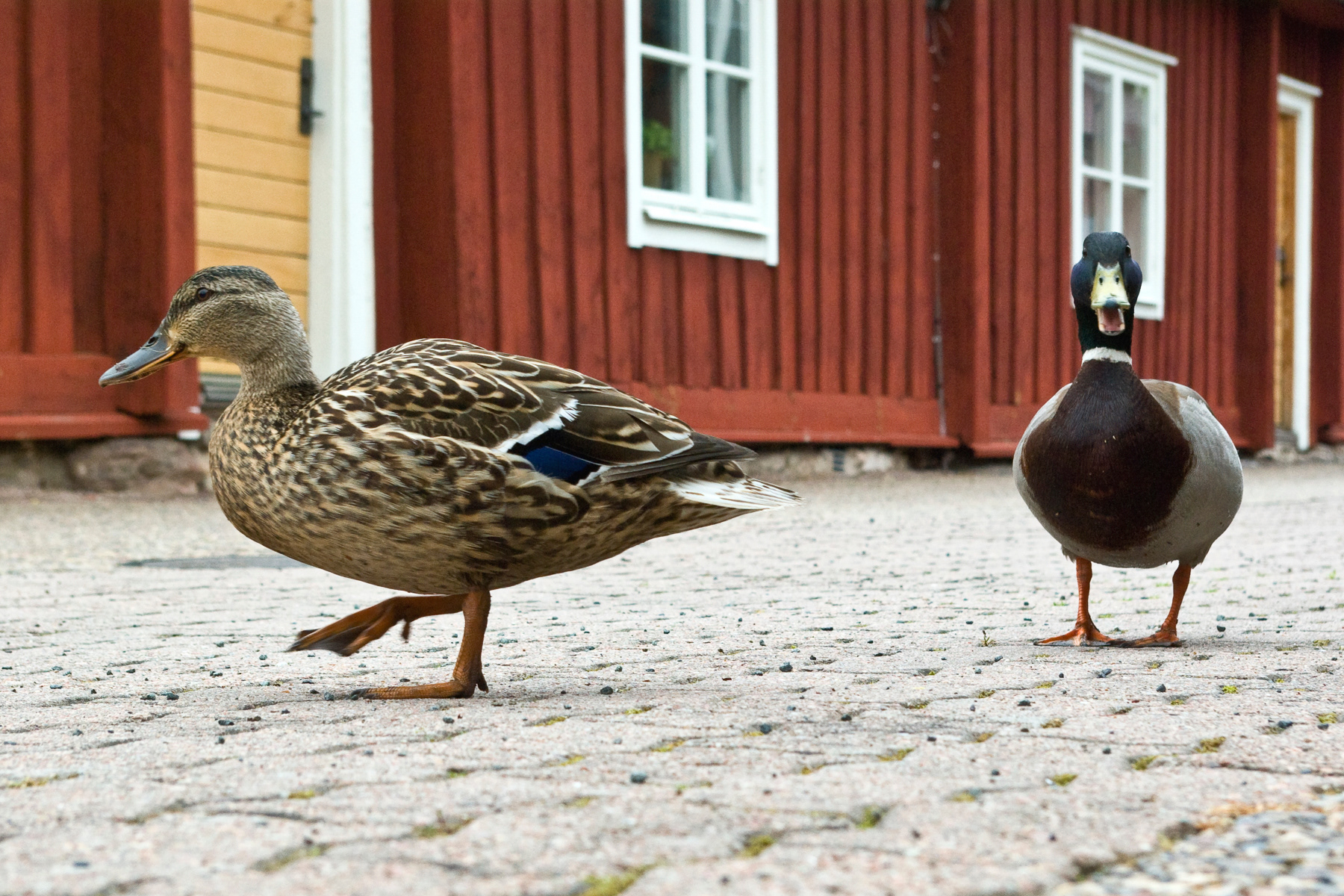
Ducks on the walk in the former worker village, May 2007.
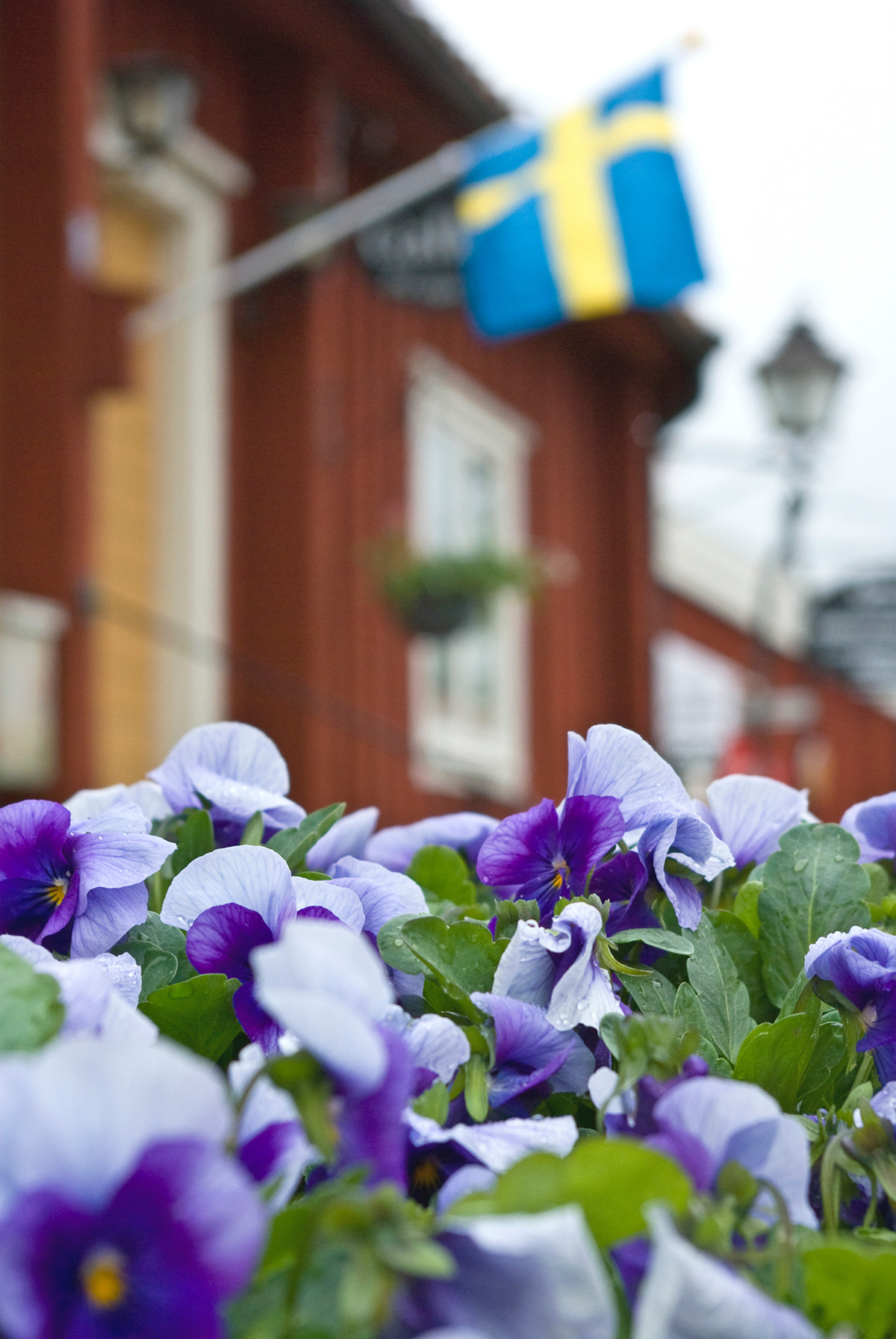
Swedish flag and flowers in the former Husqvarna workers village, May 2007.
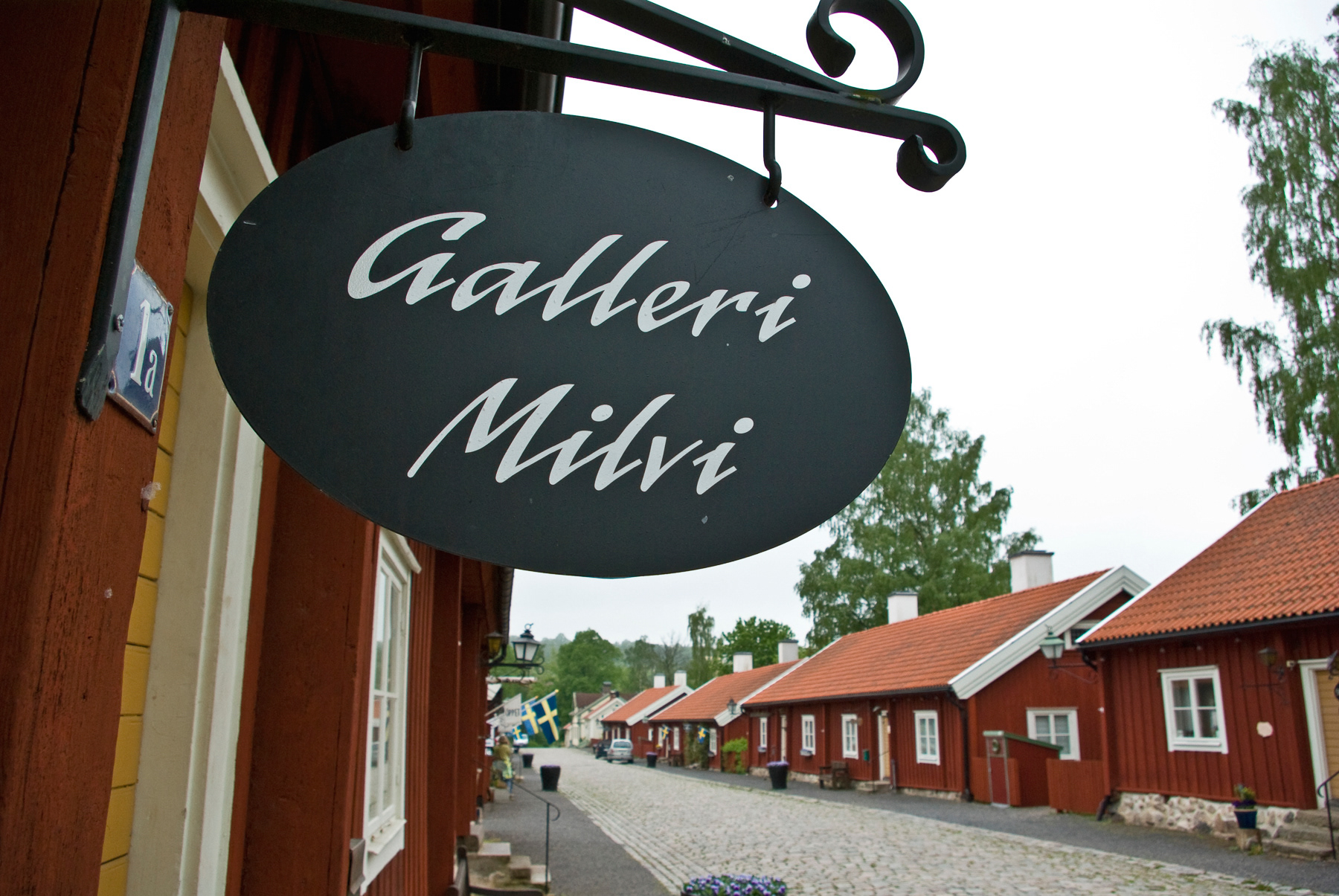
Smedbyns Hantverkare, the former worker village of the Husqvarna manufacturing plant, Huskvarna, Småland, Sweden (Sverige), May 2007.

Smedbyns Hantverkare, the former worker village of the Husqvarna manufacturing plant, May 2007.
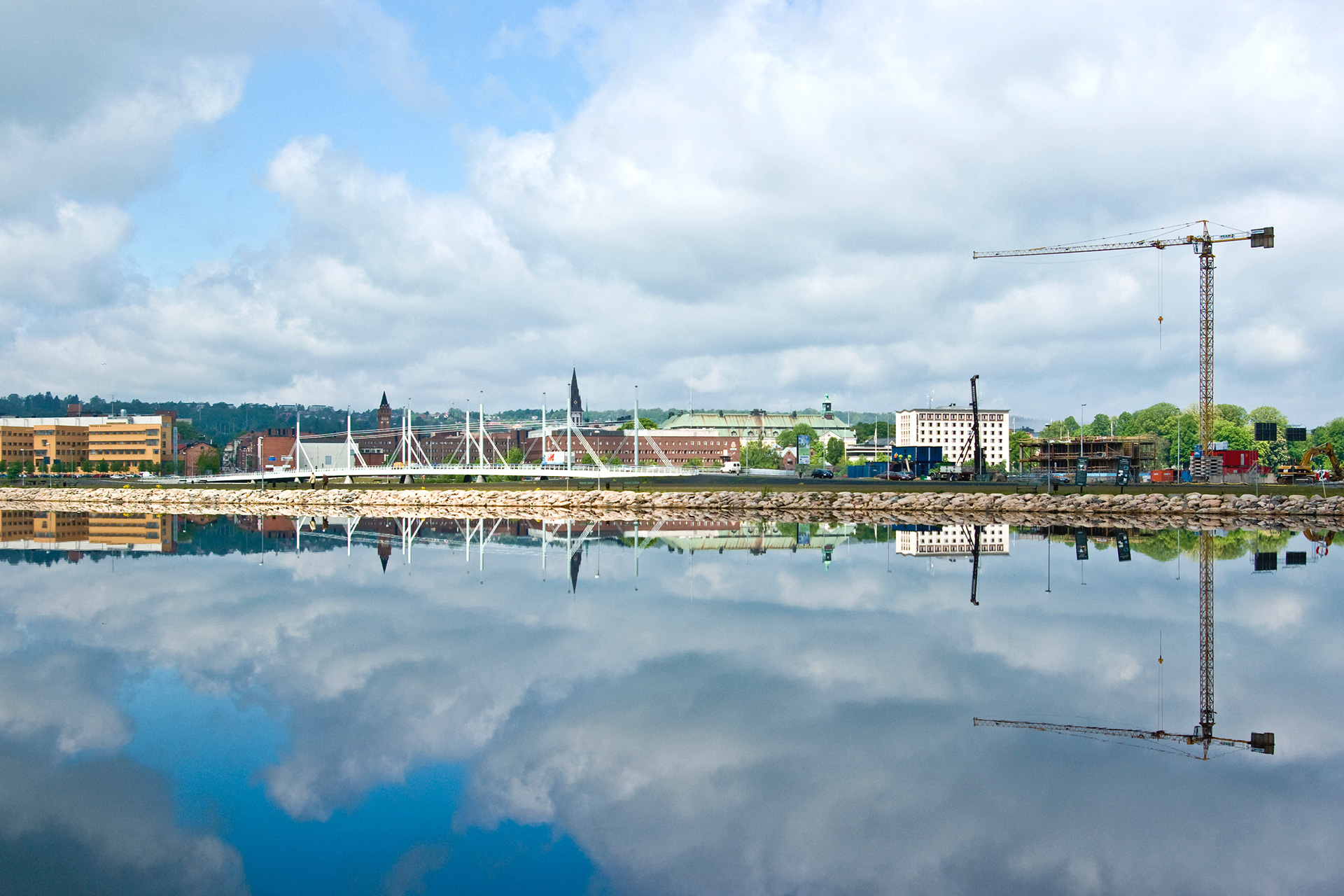
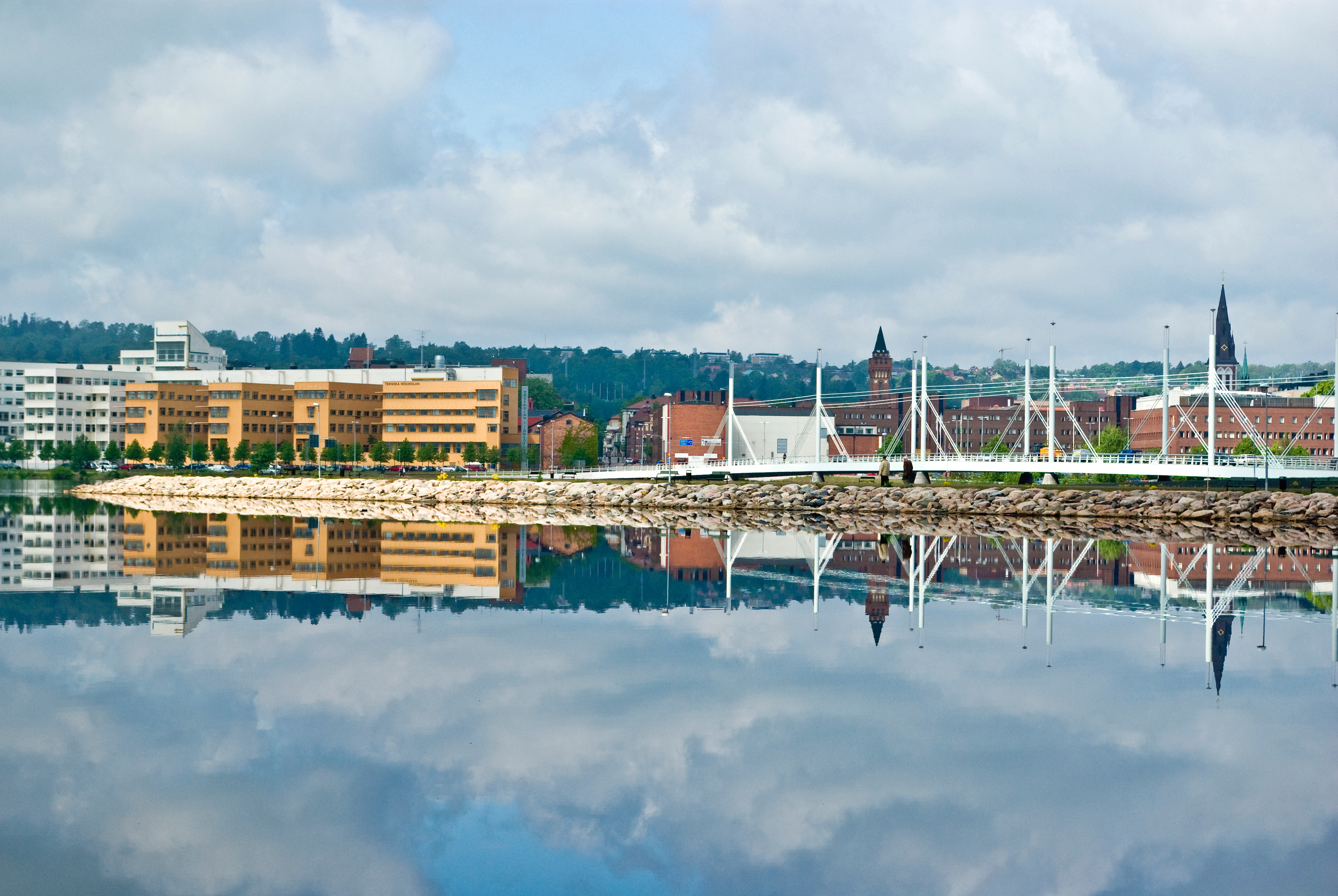
Jönköping
If Jönköping could be constructed from matchsticks, it would surely have been built with them. Between 1800 and the early 1900s, no fewer than five factories produced matchsticks there. Many Swedes consider Jönköping one of the dullest and least attractive cities in the country, but that does not deter believers from gathering in the City of Matches (Tändsticksstaden).
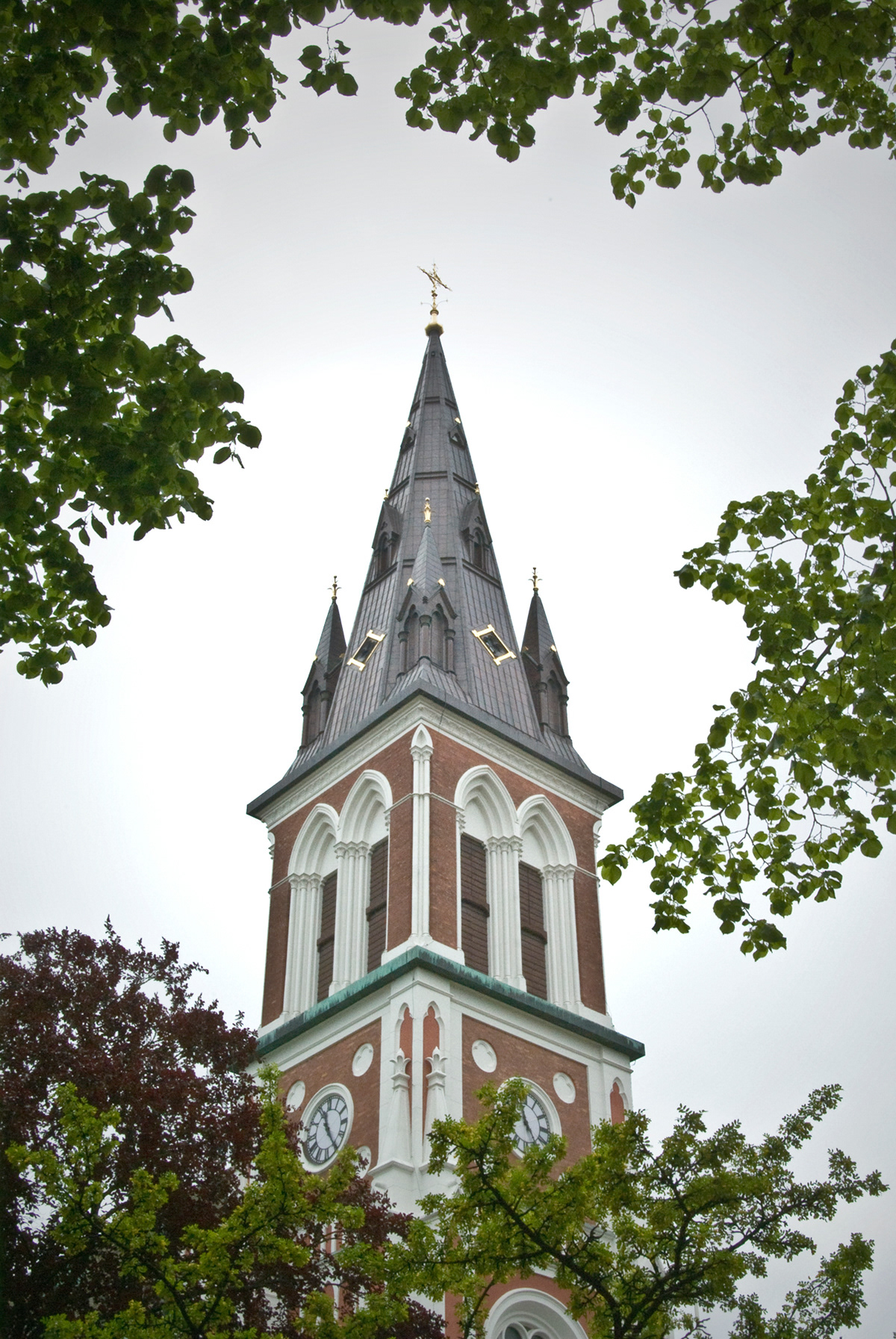
Jönköping is the religious heart of the Swedish bible belt. In the city center alone, there are a dozen houses of worship, with the Sofia Kyrka (Sofia Church) as the architectural centrepiece. The entire city has 29 registered religious sites.
The Sophia Church tower, May 2007.
Lake Vänern
Vänern is the largest lake of Sweden, and the biggest lake in Europe apart from Ladoga and Onega in Russia. While it has many relatively shallow parts, the lake is 106 metres (348 feet) deep at its most extreme point. The total vastness of Vänern measures 5,650 square kilometres (2,180 sq miles) of surface water. Its water volume is 153 cubic kilometers (54 billion tonnes).
Back to Top